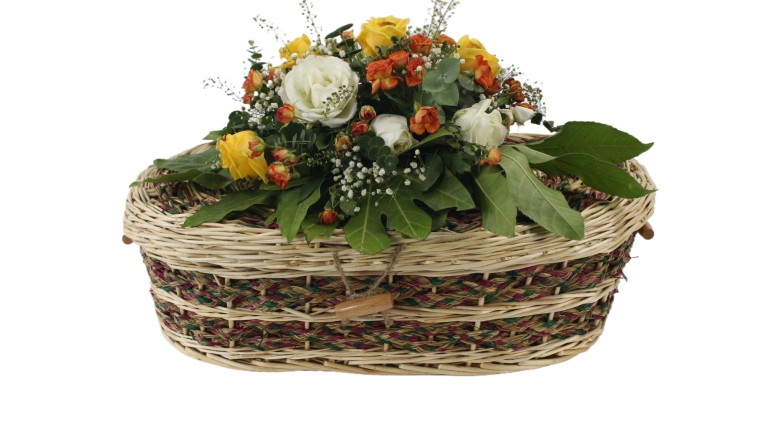
The global funeral industry is undergoing a quiet transformation, driven by a growing environmental consciousness. At the heart of this shift is the biodegradable woven coffin, a product category that merges ecological responsibility with traditional craftsmanship. Sourced predominantly from a specialized hub in China—Linyi Linshu—these coffins are gaining remarkable international traction, underscoring their increasing global importance.
A Global Shift Towards Sustainable Funerals
The traditional funeral, often reliant on non-biodegradable materials like metal and treated wood, is being re-evaluated. The global green funeral service market, valued at approximately $691 million in 2024, is projected to grow at a compound annual growth rate (CAGR) of 8.6%, reaching around $1.22 billion by 2031. This trend is fueled by a worldwide demand for simpler, cheaper, and more environmentally friendly burial options. Biodegradable woven coffins, typically made from sustainable materials like willow, rattan, and seagrass, perfectly align with this movement. They decompose naturally, leaving a minimal environmental footprint and offering a tangible way for individuals to make a final statement of ecological stewardship.
Concurrently, the broader market for biodegradable funeral products was estimated at $141.3 million in 2024, indicating a robust and expanding niche within the overall industry.
Linyi Linshu: The World’s Workshop for Woven Coffins
When discussing the global supply of biodegradable woven coffins, the conversation inevitably turns to Linyi Linshu County in China’s Shandong Province. This region has established itself as a “world factory” for handmade willow and rattan crafts, forming the backbone of the international supply chain.
The concentration of expertise in Linshu is formidable. For decades, local factories have honed their skills in weaving and working with natural fibers. Companies such as Linshu Phoenixnest Crafts Co., Ltd., Roconly Linyi Crafts Co., Ltd., and Linshu Lan Tian Cao Liu Crafts Co., Ltd. exemplify this industrial ecosystem. Their business scopes consistently highlight the production and export of handicrafts made from “grass, willow, wood, bamboo, and rattan,” with a dedicated focus on import and export operations.
This clustering of manufacturers creates significant competitive advantages:
· Master Craftsmanship: A skilled, local workforce with generational knowledge in weaving ensures high-quality, durable products.
· Economic Efficiency: A highly efficient and competitive supply chain keeps production costs manageable.
· Production Scale: The collective capacity of these factories allows them to fulfill large international orders, making Linyi Linshu a reliable source for global demand.
Global Market Dynamics and Strategic Advantages
The influence of Linshu’s factories extends deep into international markets. The business model demonstrates remarkable value addition. For instance, while a similar coffin might be priced between $90-$150 in China, its value in European markets can soar to $1,000-$2,000, with利润率 (profit margins) sometimes exceeding 1000%. This stark contrast highlights not only the cost-effectiveness of sourcing from China but also the significant premium international consumers are willing to pay for eco-friendly alternatives.
However, the market is not without its challenges. Competition in some regions is intensifying, compressing profits. Furthermore, high international shipping costs can erode margins, with one report noting a $6,000 freight cost for a container of coffins valued at $15,000. Despite this, the demand trajectory remains strong. The global pet funeral market, for which similar biodegradable products are made, is also a growing multi-billion-dollar industry, offering further diversification opportunities for savvy manufacturers.
The Road Ahead: Innovation and Branding
The future of the biodegradable woven coffin market lies in moving beyond being just a source of low-cost production. The success of Western brands like Titan Casket, which operates on a DTC (Direct-to-Consumer) model with a vast array of customizable options, shows the value of branding, marketing, and customer service. For Linyi Linshu factories, the next step is to leverage their unparalleled manufacturing prowess to build their own brands, embrace customization, and tell a compelling story about sustainability and craftsmanship to the world.
In conclusion, the biodegradable woven coffin is more than a burial product; it is a symbol of a global shift towards environmental sustainability in end-of-life practices. The factories of Linyi Linshu are not merely suppliers but are central pillars in this global market. Their continued evolution from hidden workshops to recognized brands will be crucial in shaping a more sustainable and personalized future for the global funeral industry.
We are a factory supporting eco friendly green funeral(natural willow coffins\bamboo caskets and so on) .. for detail please contact us www.roconly.com;
Roconly (LinYi) Funeral Supplies Co.,Ltd.
Whatsapp: +86-18265103836 (Whatsapp & Wechat & Tel)
Email: jason@roconly.com #willowcoffin#greencoffins#bamboocaskets#urns#naturalcoffins#chinafactory#scattertube#naturalburial#FuneralSupplies#cross#flowerbands#shrouds #carrierfunera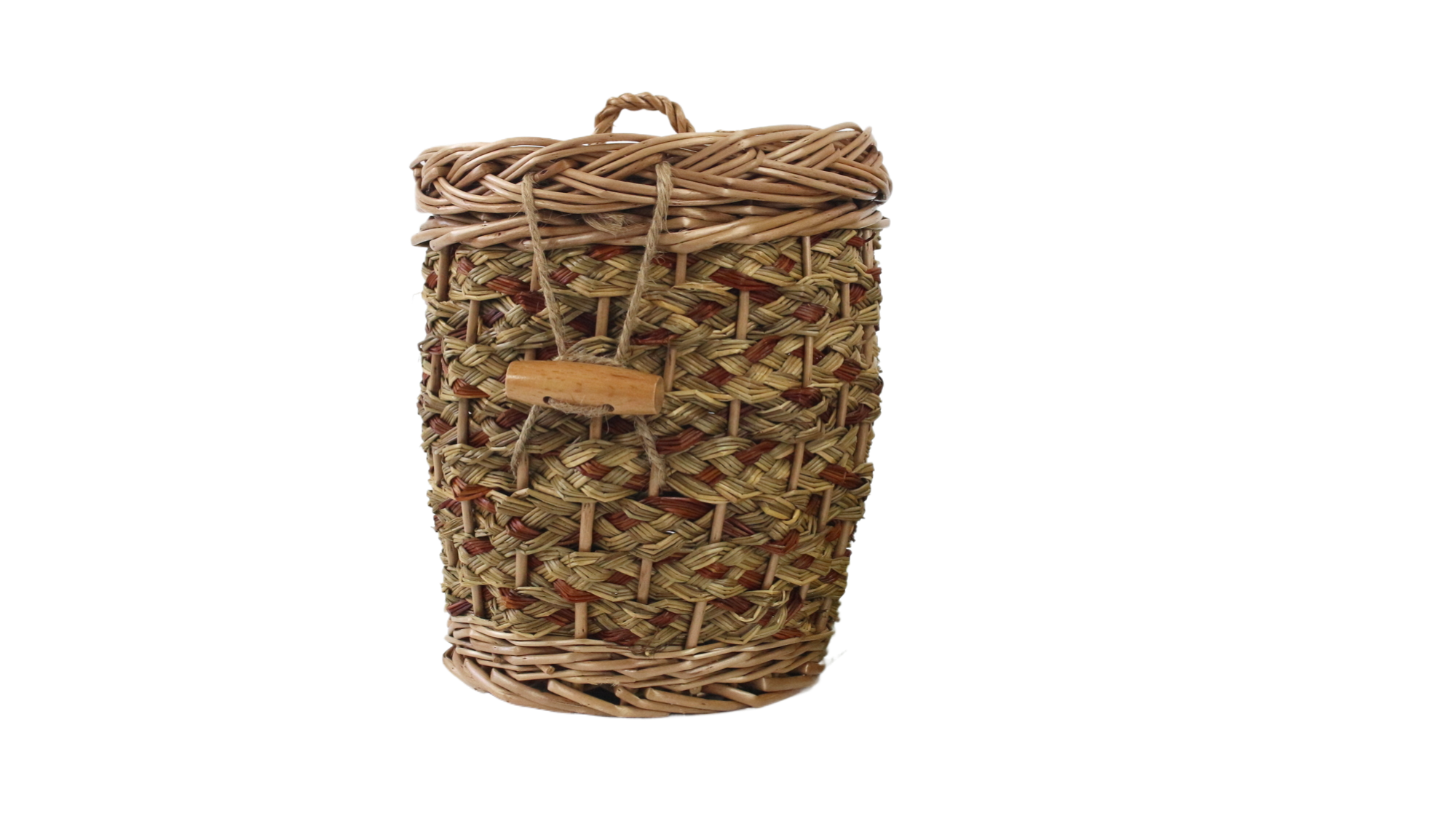 As part of the sustainable coffin subcategory, the global market for woven coffins is projected to grow from $2.3 billion in 2021 to $3.6 billion in 2031, a CAGR of 4.5%#roconlycoffins #everecoffin#casketforashes #urnswithlove #caskets @everyone@followers