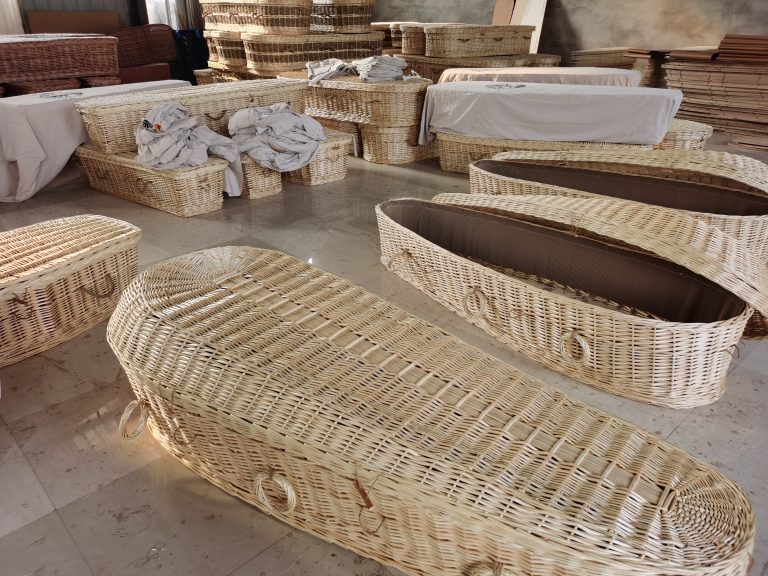
In an era of growing environmental awareness, the global funeral industry is witnessing a significant shift toward sustainable alternatives. Woven coffins, particularly those made from natural materials, are emerging as a respectful yet eco-conscious choice for both burial and cremation. As a leading source in this growing market, factories in Linshu, China, are playing an increasingly important role in supplying these products to the world.
The Global Rise of Eco-Friendly Farewells
The demand for biodegradable funeral products is more than a passing trend; it’s a movement. According to industry research, the global market for biodegradable funeral products was valued at an estimated $141.3 million in 2024, with projections suggesting it will reach $183 million by 2031, growing at a compound annual growth rate of 3.8%.
This growth is largely driven by increasing environmental concerns about traditional burial methods. Conventional coffins, often made from non-biodegradable materials or woods treated with chemicals, can leave a significant environmental footprint. In response, innovators worldwide have been developing alternatives, from woolen coffins in Britain to cardboard and mushroom-based solutions in Europe.
Woven Coffins: A Solution for Both Burial and Cremation
A common question among those considering sustainable options is whether woven coffins are suitable for both primary disposal methods. The answer is a resounding yes.
For Burial
Woven coffins made from natural, biodegradable materials are perfectly suited for green burials. These coffins, often crafted from bamboo, willow, seagrass, or other sustainable plant materials, are designed to break down naturally in the earth without leaving harmful residues.
The UK’s introduction of woolen coffins demonstrates this principle perfectly. As reported, these coffins are “percent biodegradable,” meaning they “will not cause harm to the environment after burial”. Similarly, woven coffins from Linshu factories are typically made from renewable resources that return to the earth efficiently and safely.
For Cremation
When it comes to cremation, woven coffins offer distinct advantages. Traditional wooden coffins can require longer burning times and release more emissions. In contrast, natural woven coffins typically feature lower moisture content and simpler material composition, leading to:
· Reduced cremation time
· Lower energy consumption
· Fewer emissions compared to some traditional options
One study on alternative coffins noted that paper-based options reduced cremation time by approximately 26 minutes compared to traditional coffins. While specific data on woven coffins varies by material, the principle of more efficient combustion remains consistent.
The Linshu Advantage: China’s Role in Sustainable Funeral Solutions
The Linshu region in Shandong province has emerged as a significant production hub for woven and other eco-friendly funeral products. Factories in this area, including those in Linyi and Linshu, leverage generations of craftsmanship in weaving techniques combined with modern manufacturing capabilities.
Companies such as Linyi Roconly craft Products Co., Ltd. and Shandong Phoenixnest craft Co., Ltd. represent this growing sector. These manufacturers combine traditional weaving techniques with strict quality control to produce coffins that meet international standards for both sustainability and dignity.
The presence of multiple manufacturers in the region has created a competitive ecosystem that drives innovation while maintaining cost-effectiveness, making sustainable funeral options more accessible worldwide.
Beyond Materials: The Emotional Resonance of Woven Coffins
The appeal of woven coffins extends beyond their environmental credentials. There is a growing recognition that funeral products should offer emotional comfort to grieving families.
As a representative from AW Hainsworth, the British manufacturer of woolen coffins, noted: “Conventional coffins made from wood appear cold, angular, and unapproachable to grieving family members”. In contrast, the softer textures and warmer appearance of woven coffins can provide a more comforting aesthetic during difficult times.
This combination of environmental responsibility and emotional sensitivity represents the future of the funeral industry—a future that Linshu’s factories are well-positioned to support.
Looking Ahead
As global awareness of environmental issues continues to grow, and as more regions adopt regulations favoring sustainable funeral practices, the demand for woven coffins suitable for both burial and cremation is likely to increase. With their manufacturing capabilities, cost-effectiveness, and growing expertise in eco-friendly materials, Linshu’s factories stand ready to meet this global need, offering a final rest that honors both the departed and the planet.
We are a factory supporting eco friendly green funeral(natural willow coffins\bamboo caskets and so on) .. for detail please contact us www.roconly.com;
Roconly (LinYi) Funeral Supplies Co.,Ltd.
Whatsapp: +86-18265103836 (Whatsapp & Wechat & Tel)
Email: jason@roconly.com
#willowcoffin#greencoffins#bamboocaskets#urns#naturalcoffins#chinafactory#scattertube#naturalburial#FuneralSupplies#cross#flowerbands#shrouds #carrierfuneral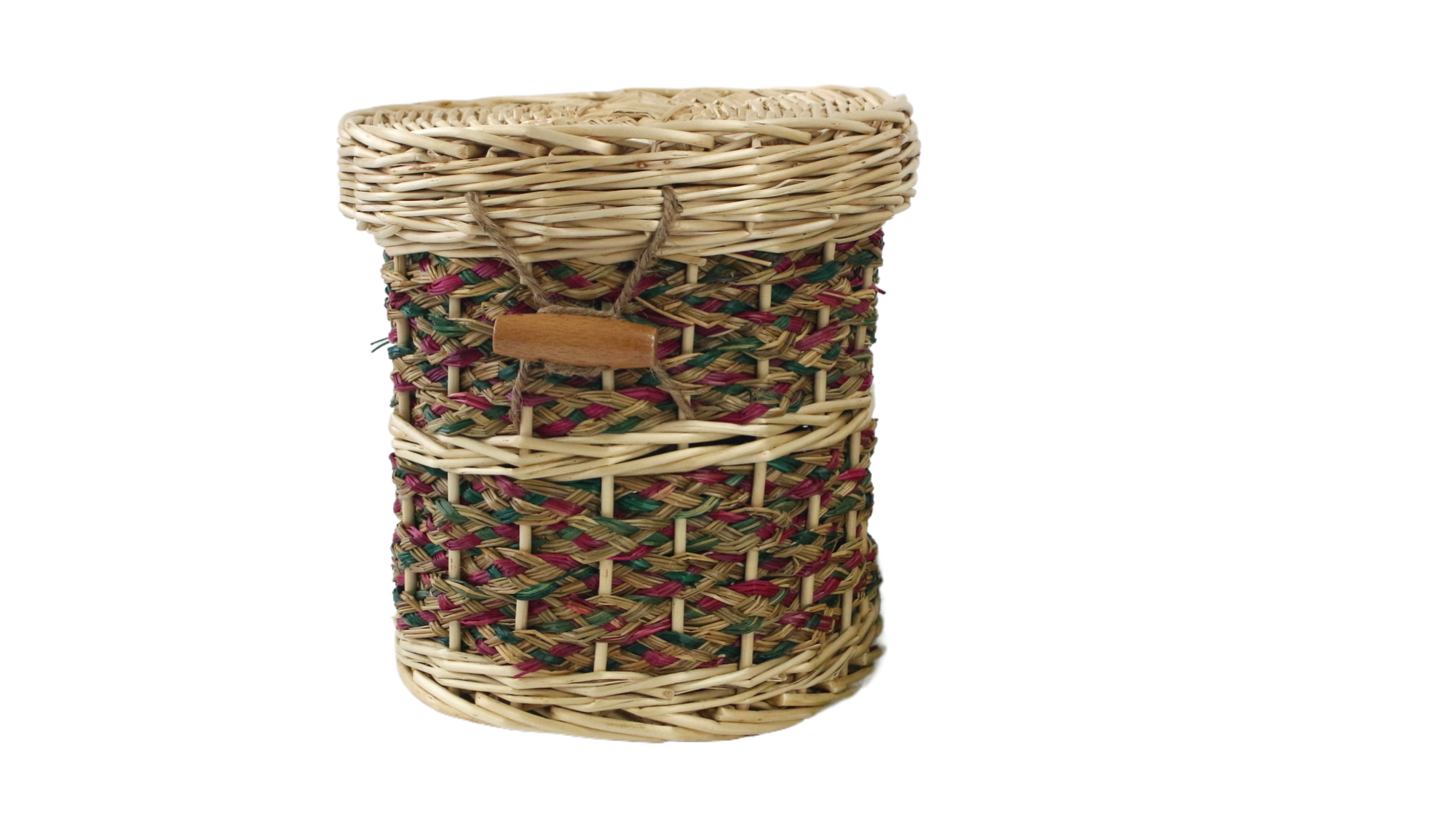 Biodegradable woven coffins, crafted from natural materials like willow, rattan, or seagrass, represent a cornerstone of eco-friendly funeral practices worldwide#roconlycoffins #everecoffin#personalised#love#memories#ashe#urns #memorial@everyone@followers