Global Adoption and Regional Innovations
1. Europe:
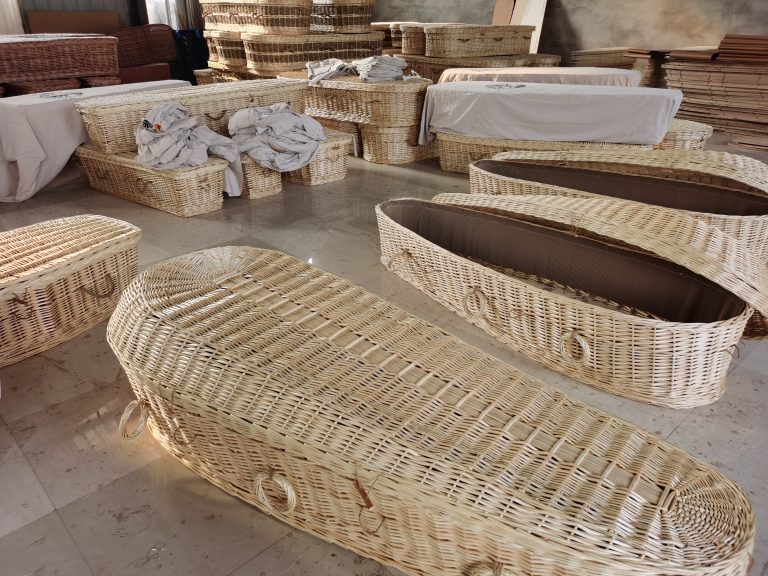
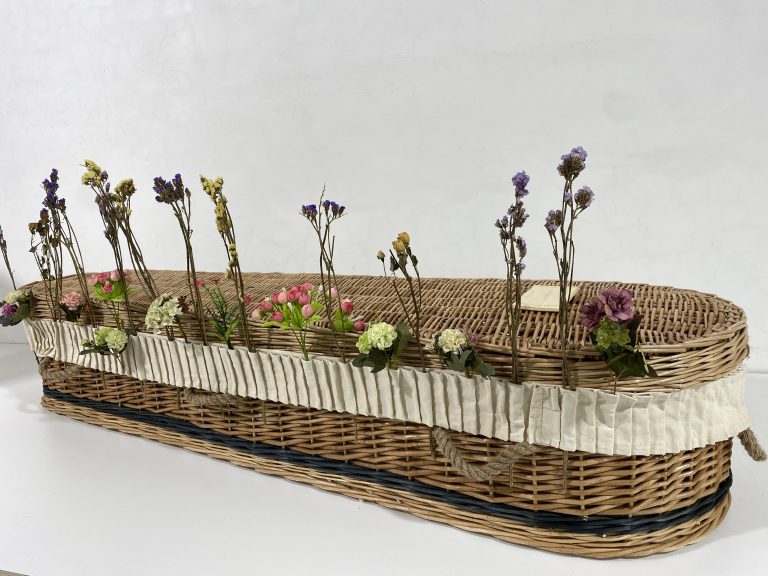
◦ Willow Dominance: The UK and Netherlands lead in willow coffin adoption, with brands like Ecocoffin and Loop Biotech crafting coffins that decompose in 45–90 days under optimal conditions. These designs often incorporate mycelium layers to accelerate breakdown .
◦ Policy Alignment: The EU’s Circular Economy Action Plan incentivizes biodegradable materials, with Germany mandating 50% of caskets to be plant-based by 2030.
2. Asia:
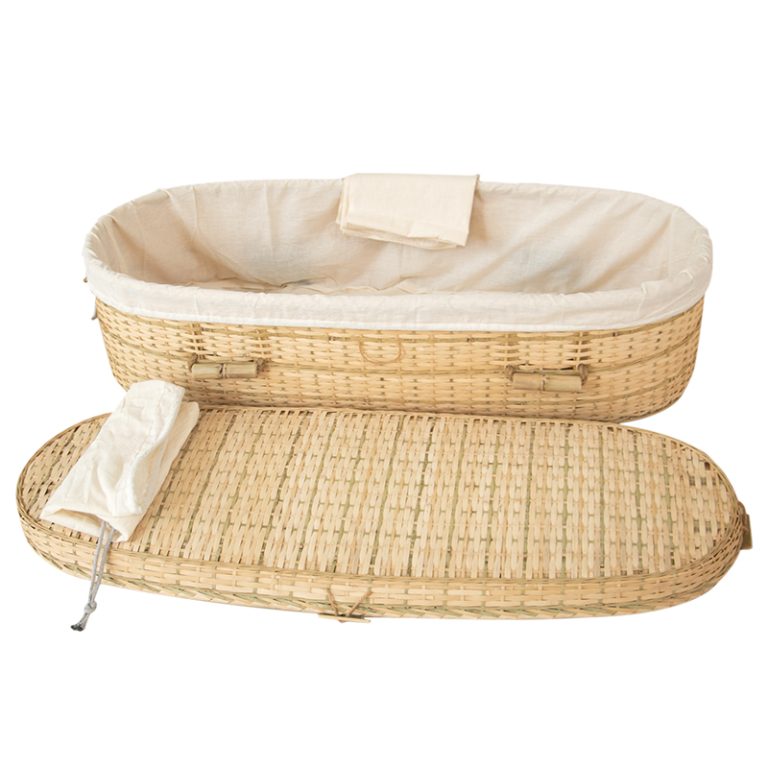
◦ Bamboo Leadership: China’s Linshu Linyi produces 70% of global bamboo coffins, utilizing patented techniques like heat-treated joints to enhance durability while maintaining biodegradability. Indian artisans in Kerala use coconut palm and bamboo hybrids, tailored for coastal climates .
◦ Cultural Synergy: In Japan, bamboo coffins are paired with shinrin-yoku (forest bathing) rituals, emphasizing their role in ecological harmony.
3. Americas:
◦ Hybrid Designs: U.S. companies like Titan Bamboo Casket blend bamboo with recycled plastics, achieving decomposition rates of 2–4 years. Brazil experiments with bamboo-coconut fiber composites for tropical burial sites .
Factors Influencing Decomposition
1. Soil Composition:
◦ Sandy soils accelerate breakdown by 30%, while clay-rich soils extend timelines by 20% due to limited microbial activity .
2. Climate:
◦ Warm, humid climates (e.g., Southeast Asia) reduce decomposition time by 40% compared to arid regions .
3. Burial Practices:
◦ Shallow graves (less than 1.5 meters) expose coffins to oxygen and soil fauna, enhancing degradation. Cremation-compatible designs further reduce time by 25% .
Challenges and Future Directions
While willow and bamboo coffins offer significant advantages, challenges persist:
• Cost Barriers: Bamboo coffins cost 20–30% more than traditional options due to harvesting and treatment processes.
• Regulatory Gaps: Inconsistent burial laws (e.g., U.S. state restrictions on green cemeteries) hinder market growth.
Emerging solutions include:
• Industrial Composting: Facilities like Recompose in Washington use controlled environments to break down bamboo coffins in 45 days .
• Certifications: The Green Burial Council’s certification ensures materials meet biodegradability standards, boosting consumer trust .
Conclusion
Willow and bamboo coffins exemplify sustainable innovation, offering decomposition timelines that align with ecological imperatives. While willow’s rapid breakdown (6 months–2 years) suits fast-decay environments, bamboo’s versatility (1–5 years) makes it a global staple. As industries adopt advanced techniques and policies evolve, these materials promise to revolutionize deathcare, transforming burial practices into acts of planetary stewardship. By prioritizing localized production—such as China’s Linshu Linyi and Europe’s mushroom-based hybrids—we can accelerate the transition to a greener, more respectful end-of-life cycle.
We are a factory supporting eco friendly green funeral(natural willow coffins\bamboo caskets and so on) .. for detail please contact us www.phoenixnestcoffins.com;
Phoenix Nest ( Shandong ) Crafts Co.,Ltd.
Whatsapp: +86-18265103836 (Whatsapp & Wechat & Tel)
Email: jason@phoenxinestcoffin.cn
#willowcoffin#greencoffins#bamboocaskets#urns#naturalcoffins#chinafactory#scattertube#naturalburial#FuneralSupplies#cross#flowerbands#shrouds #carrierfuneral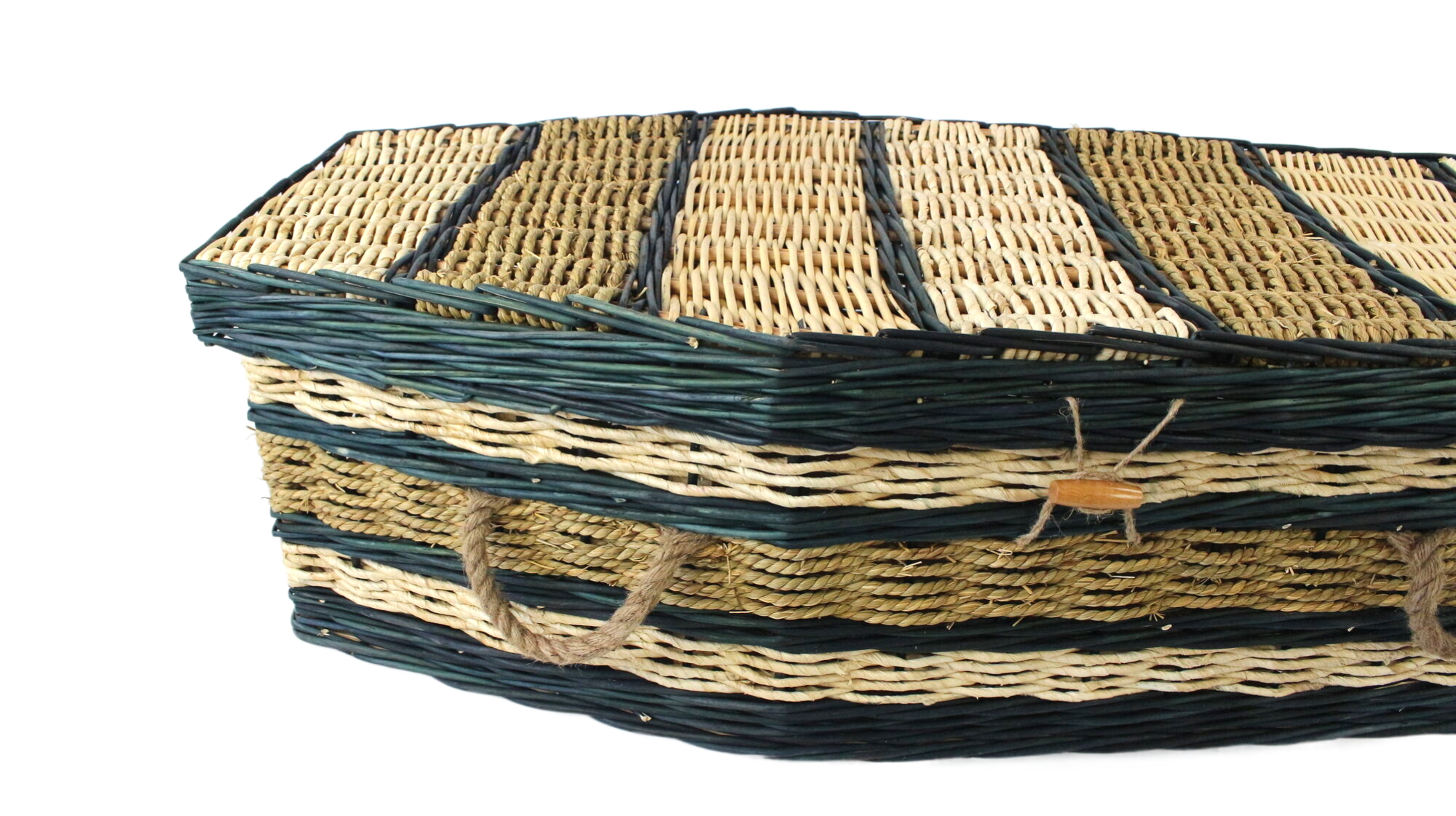 Traditional weaving, honed over a century, ensures quality without premium pricing, woven coffins customizable for European or American styles, meet global standards while retaining affordability#phoenixnestcoffins #crematorium #buried him beneath the willow coffin@everyone@followers